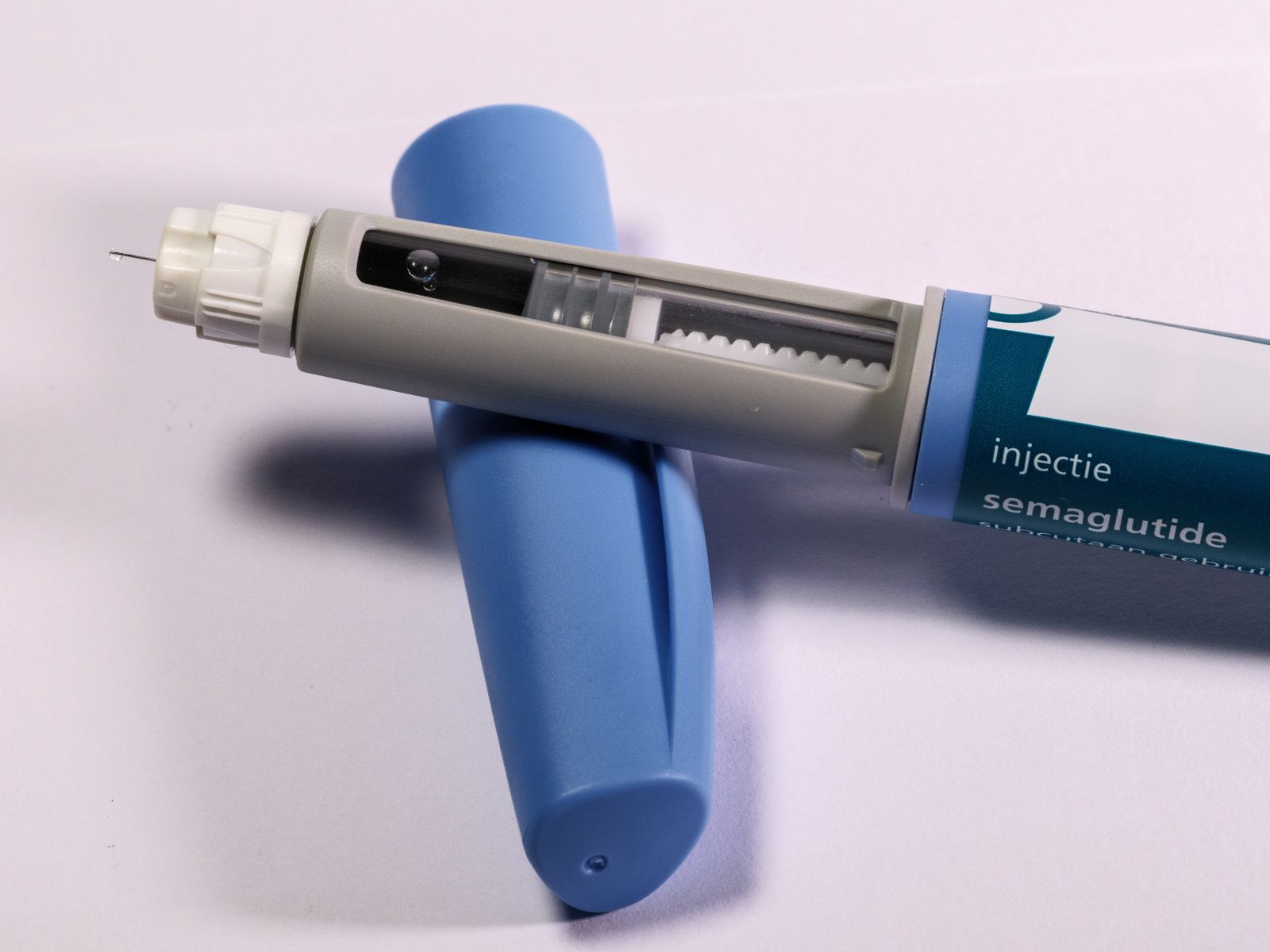
In our clinic, the most common question we hear about medical weight management is no longer whether these medications work—it's which one makes sense for a specific person. Both semaglutide (marketed as Ozempic for diabetes, Wegovy for weight loss) and tirzepatide (Mounjaro for diabetes, Zepbound for weight loss) are profoundly effective, but they work through distinct mechanisms, produce different magnitudes of weight loss, and carry unique side-effect signatures that make patient selection critical.
How Do Semaglutide and Tirzepatide Work Differently?
Semaglutide is a GLP-1 receptor agonist—it mimics glucagon-like peptide-1, a hormone your gut releases after eating that signals satiety to your brain and slows gastric emptying. The STEP 1 trial published in The New England Journal of Medicine showed that semaglutide 2.4 mg weekly produced an average 14.9% body weight reduction over 68 weeks, compared to 2.4% with placebo.
Tirzepatide adds a second receptor target: glucose-dependent insulinotropic polypeptide (GIP). While GLP-1 primarily drives satiety and slows digestion, GIP modulates insulin secretion, fat metabolism, and potentially central appetite regulation through distinct pathways. The SURMOUNT-1 study in NEJM demonstrated that tirzepatide 15 mg weekly led to 20.9% mean weight loss over 72 weeks—nearly 50% more than semaglutide in head-to-head population averages. The 10 mg dose produced 19.5% loss, and even the 5 mg dose achieved 15% reduction, matching high-dose semaglutide.
We see this difference clinically: patients on tirzepatide often report earlier and more complete appetite suppression, though this comes with trade-offs in tolerability that we'll address below.
What Weight Loss Should You Realistically Expect?
Numbers from registration trials reflect controlled research conditions, but real-world outcomes in our clinic generally align when adherence and titration are optimized. With semaglutide, most patients lose 12–18% of baseline weight over 12–16 months, with the median landing around 15%. Responders—those losing ≥10%—comprise approximately 86% of patients who complete titration to 2.4 mg weekly.
Tirzepatide consistently outperforms in aggregate data. In SURMOUNT-1, 89% of patients on the 15 mg dose achieved ≥10% weight loss, and 57% reached ≥20% reduction. We observe that patients who plateau on semaglutide at 12–14% loss sometimes achieve an additional 6–10% reduction when transitioned to tirzepatide, though this isn't universal and requires careful re-titration.
Eli Lilly's manufacturer data for Zepbound notes that weight loss continues through month 18–20 in many patients before plateauing, which is longer than the typical 12-month plateau seen with semaglutide. Both medications require ongoing use; discontinuation studies show that most patients regain approximately two-thirds of lost weight within one year of stopping.
For metabolic outcomes beyond weight, tirzepatide demonstrates superior HbA1c reduction in diabetic populations—up to 2.4% decrease at the highest dose versus 1.8% with semaglutide 1 mg in the SURPASS-2 head-to-head trial.
How Do Side Effects Compare?
Both medications share a gastrointestinal side-effect profile: nausea, vomiting, diarrhea, constipation, and abdominal discomfort are the most common adverse events. These are mechanism-related—delayed gastric emptying and altered gut motility affect nearly everyone to some degree.
The critical difference is intensity and timing. Tirzepatide's dual agonism appears to amplify GI effects, particularly during titration. In SURMOUNT-1, nausea occurred in 31% of tirzepatide patients (15 mg dose) versus 20% in the semaglutide STEP trials. More patients discontinued tirzepatide due to GI intolerance—6.2% versus 4.3% for semaglutide.
We manage this through ultra-slow titration: starting at 2.5 mg for 6–8 weeks (rather than the standard 4 weeks), sometimes extending to 12 weeks if needed, then advancing by 2.5 mg increments only when side effects have fully resolved. With semaglutide, standard monthly titration (0.25 mg → 0.5 mg → 1 mg → 1.7 mg → 2.4 mg) is better tolerated by most patients.
Novo Nordisk's Wegovy prescribing information warns of potential thyroid C-cell tumors (seen in rodent studies, not confirmed in humans) and pancreatitis risk (~0.2% incidence). Tirzepatide carries the same warnings. Both are contraindicated in patients with personal or family history of medullary thyroid carcinoma or multiple endocrine neoplasia syndrome type 2.
We also counsel patients that gallstone formation increases with any rapid weight loss—incidence is roughly 2–3% with both medications, mitigated somewhat by slower, steady loss rather than aggressive early drops.
What About Cost and Insurance Coverage?
This is where decision-making becomes frustratingly non-clinical. List prices are similar: approximately $1,350–$1,400 per month for both Wegovy and Zepbound without insurance. Ozempic and Mounjaro (the diabetes-labeled versions) run $900–$1,000 monthly but are only FDA-approved for type 2 diabetes, not weight loss.
Insurance coverage is fragmented. Many commercial plans cover semaglutide or tirzepatide for diabetes (Ozempic/Mounjaro) with prior authorization, but explicitly exclude weight-loss indications (Wegovy/Zepbound) even when BMI exceeds 30 or exceeds 27 with comorbidities. Medicare Part D plans cannot legally cover weight-loss medications, full stop, though they may cover the diabetes formulations.
Novo Nordisk's savings program and Lilly's savings card for Zepbound can reduce out-of-pocket cost to $25–$550 per month for commercially insured patients, but eligibility excludes government insurance. We help patients navigate compounding pharmacies for semaglutide (not available for tirzepatide currently), which can reduce cost to $200–$400 monthly, though formulation consistency varies.
In practice, insurance coverage often determines the initial medication choice more than clinical優位性—a reality we work within while advocating for coverage parity.
Which Medication Fits Which Patient Profile?
We start with semaglutide (Wegovy/Ozempic) for patients who:
- Have never used a GLP-1 medication and want to assess tolerance with a slightly gentler GI profile
- Carry insurance coverage for semaglutide but not tirzepatide
- Have baseline BMI 30–35 with modest metabolic dysfunction, where 12–15% loss will likely achieve clinical goals
- Prefer once-weekly injection but have needle anxiety (semaglutide uses a smaller-volume injection)
We favor tirzepatide (Mounjaro/Zepbound) for:
- Patients with BMI ≥40 or ≥35 with significant comorbidities (severe sleep apnea, NASH, uncontrolled hypertension) where greater weight loss translates to larger metabolic benefit
- Type 2 diabetics with HbA1c >8.5% who need aggressive glycemic control alongside weight reduction
- Patients who completed semaglutide titration but plateaued below their target weight loss (typically after 9–12 months)
- Individuals willing to tolerate potentially more intense GI side effects during titration in exchange for superior efficacy
For patients with type 2 diabetes, the answer is more straightforward: both medications improve glycemic control, but tirzepatide's dual mechanism produces greater HbA1c reduction and higher rates of diabetes remission (defined as HbA1c <6.5% without glucose-lowering medications). A 2023 meta-analysis in Diabetes, Obesity and Metabolism confirmed tirzepatide's superiority across diabetes outcomes.
Can You Switch From Semaglutide to Tirzepatide (or Vice Versa)?
Yes, and we do this routinely. The most common scenario is a patient who loses 12–14% on semaglutide 2.4 mg but wants to reach 20% loss for a specific health goal—joint replacement eligibility, NASH reversal, or fertility optimization. We transition by:
- Continuing semaglutide through the first tirzepatide dose (no washout needed)
- Starting tirzepatide at 2.5 mg, not 5 mg, even though they're GLP-1-experienced—the GIP component is novel and requires tolerance-building
- Extending titration intervals to 6–8 weeks per step
- Monitoring for recurrence of nausea, which often reappears transiently during the switch
Clinical guidance from the American Diabetes Association supports switching between incretin therapies when response is inadequate, though head-to-head switching studies are limited. In our experience, about 60% of patients who switch from semaglutide to tirzepatide achieve an additional 4–8% weight loss over the subsequent 6–9 months.
Switching from tirzepatide to semaglutide is less common—usually driven by cost or intolerable side effects. Weight loss often stalls or partially reverses with this direction of switch, though metabolic benefits (improved insulin sensitivity, lower triglycerides) are generally maintained.
How Do We Decide in Clinical Practice?
In our clinic, medication selection follows a three-step framework. First, we define the clinical goal: Is this primarily weight loss, diabetes control, or both? What magnitude of change do biomarkers or body composition analysis suggest is needed? Second, we assess tolerance risk: history of gastroparesis, cyclic vomiting, or IBS increases side-effect likelihood with either medication but especially tirzepatide. Third, we navigate coverage and cost—because a medication the patient cannot afford or sustain is clinically irrelevant.
When insurance covers both equally (rare but increasingly common with some commercial plans), we typically start with semaglutide for BMI 30–37 and tirzepatide for BMI ≥38 or uncontrolled diabetes, then reassess at month 6. When coverage differs, we start with the covered option and plan a 9-month efficacy checkpoint to decide if switching justifies out-of-pocket cost.
Neither medication is right for everyone, and both require lifelong use to sustain results—a conversation we have before the first injection. But for patients with obesity or metabolic disease who've struggled with traditional approaches, the choice between these two medications is a choice between two genuinely transformative options. The question isn't whether they work; it's which one works better for you.