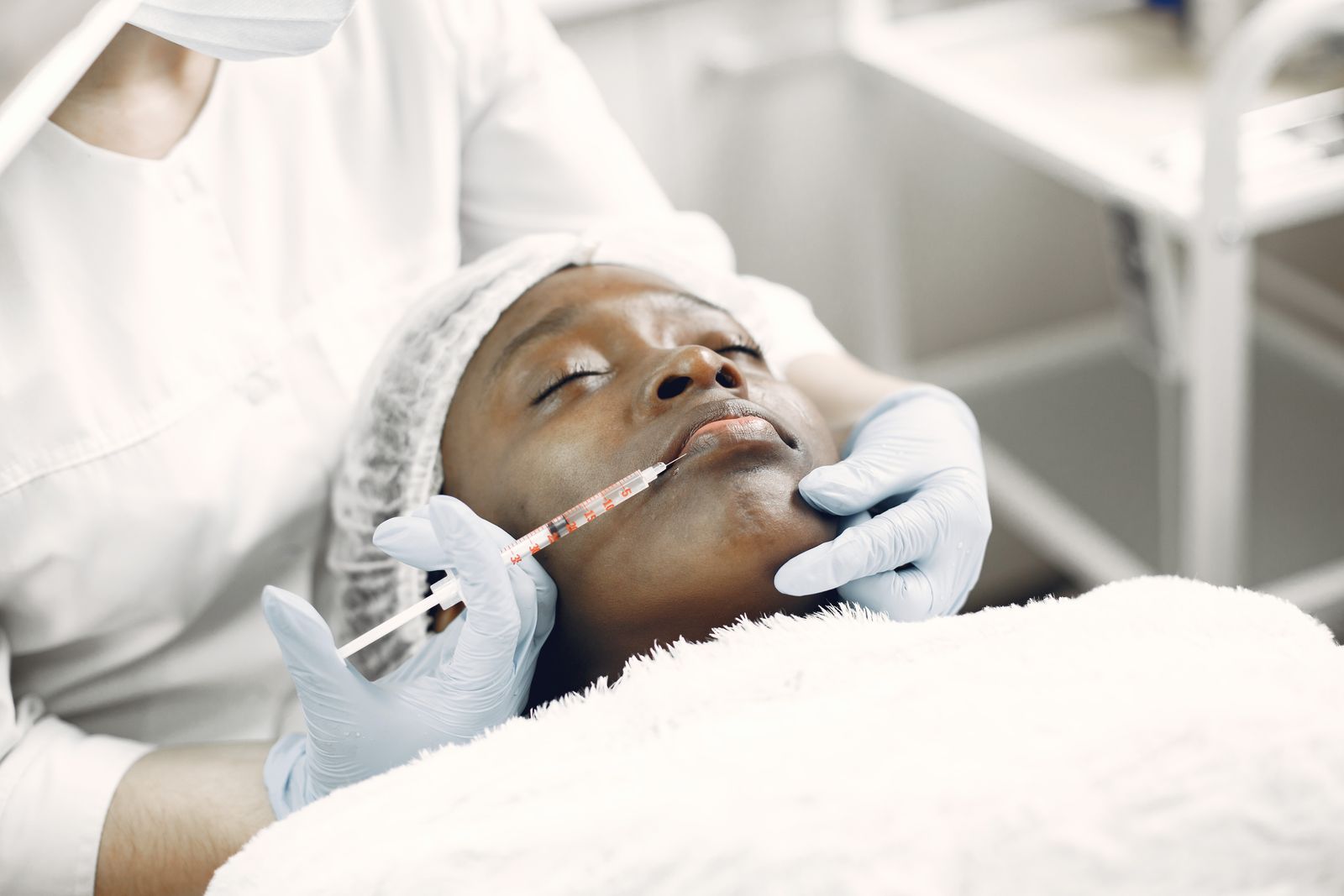
If you've researched non-surgical skin tightening, you've likely encountered high-intensity focused ultrasound (HIFU), Ultherapy, and radiofrequency devices in the same breath. They're often conflated, but they work at entirely different tissue depths and achieve different outcomes. HIFU and Ultherapy both use focused ultrasound — Ultherapy is simply the brand-name pioneer, while newer HIFU platforms have refined the technology. Radiofrequency, by contrast, heats the dermis through electrical current. Understanding the mechanism, depth, and treatment signature of each allows you to make an informed choice about which modality aligns with your anatomy and goals.
What is HIFU and how does it differ from Ultherapy?
HIFU stands for high-intensity focused ultrasound. It delivers thermal energy to precise depths beneath the skin, triggering neocollagenesis without breaking the surface. Ultherapy is the original FDA-cleared HIFU device, approved in 2009 for brow lifting and in subsequent years for the submental region and décolletage. Ultherapy uses proprietary DeepSEE imaging, which visualizes tissue layers in real time during treatment — a feature that sets it apart from many generic HIFU platforms.
Newer HIFU devices — including those used in our clinic — offer similar or improved energy profiles with modular cartridges at multiple depths: 1.5mm (superficial dermis), 3.0mm (deep dermis), 4.5mm (SMAS layer), and sometimes 6.0mm, 9.0mm, or 13.0mm for submental and body use. The SMAS (superficial musculoaponeurotic system) is the fibromuscular layer that surgeons manipulate during a facelift. By creating controlled thermal injury at this depth, HIFU produces a lifting effect without incisions. A 2019 meta-analysis in Aesthetic Surgery Journal reviewing 2,500+ patients found that HIFU at 4.5mm produces measurable brow elevation — typically 1.0–2.0mm — and improvement in Merz jawline and neck laxity scales at 90 days.
The key distinction: all Ultherapy is HIFU, but not all HIFU is Ultherapy. Ultherapy's patents have expired, and multiple manufacturers now offer FDA-cleared or CE-marked HIFU systems with comparable or superior energy delivery, shorter treatment times, and lower cost. When we evaluate a patient for HIFU, we select cartridge depths based on tissue thickness, laxity grade, and target outcome — an approach that extends beyond Ultherapy's original protocol.
How does radiofrequency skin tightening work?
Radiofrequency (RF) devices generate heat through electromagnetic waves, typically in the range of 0.3–10 MHz. Unlike HIFU, which focuses energy at a single focal point deep in tissue, RF creates bulk volumetric heating of the dermis and upper subcutaneous fat. The two most clinically robust RF platforms are Thermage FLX, a monopolar system cleared by the FDA in 2002 and updated in 2017, and dual-frequency monopolar systems like Exilis Ultra or XERF.
Thermage delivers capacitive RF energy through a single electrode, with heat dissipation controlled by a cryogen spray cooling the epidermis. Treatment typically requires 400–900 pulses depending on the treatment area, and the sensation is often described as brief, deep heat. A 2020 study in Dermatologic Surgery demonstrated that Thermage FLX produces statistically significant improvement in lower face and neck laxity at 6 months, with patient satisfaction scores averaging 7.2/10.
Dual-frequency RF systems like XERF combine two wavelengths — commonly 1 MHz for deeper penetration and 40.68 MHz for superficial tightening — in a single handpiece. By alternating or blending frequencies, these platforms can target collagen fibers in the reticular dermis while protecting the epidermis. In our experience, RF is best suited for patients with mild to moderate skin laxity who want gradual tightening without the deeper architectural lift that HIFU provides. RF induces immediate collagen contraction and stimulates fibroblast activity over 3–6 months. Results are more subtle than HIFU but can be very natural for periocular crepiness, jawline softening, and texture improvement.
The primary difference between RF and HIFU is depth and mechanism. RF does not reach the SMAS; it remodels dermal collagen and tightens skin from within the dermis. HIFU bypasses the dermis entirely to target fibromuscular structures. This is not a quality judgment — it's a clinical distinction. Some patients benefit from sequential or combination treatment.
Who is the best candidate for each modality?
We select modality based on tissue laxity grade, patient age, skin thickness, and the anatomic outcome desired. According to the American Society for Dermatologic Surgery, HIFU is most effective in patients aged 30–60 with mild to moderate skin laxity and good skin elasticity. Beyond age 65 or in cases of severe laxity with significant fat atrophy, surgical intervention often yields superior and longer-lasting outcomes.
For HIFU or Ultherapy, ideal candidates include patients with:
- Early jowling and loss of jawline definition
- Mild to moderate brow ptosis
- Lax submental skin with preserved submental fat pads (not excessive fullness, which may require Kybella or liposuction)
- Good bone structure and skin quality
- Realistic expectations: HIFU produces a 30–50% improvement compared to surgical facelift, not a replacement
Patients with very thin skin, bony faces, or those on anticoagulation require modified protocols or alternative modalities, as thermal injury near bone can produce discomfort and rarely, transient neuropraxia.
Radiofrequency is better suited for:
- Patients in their 30s to early 50s with skin texture concerns and early laxity
- Periocular laxity, where HIFU's focal energy is contraindicated near the orbital rim
- Neck texture and horizontal rhytides ("necklace lines")
- Patients seeking subtle, natural results who may not tolerate the discomfort of HIFU
- Combination protocols with injectables — RF can be performed 2 weeks after filler or toxin without interference
In our clinic, approximately 40% of patients presenting for non-surgical tightening receive combination protocols: HIFU at 4.5mm for the jawline and submentum, and RF or microneedling RF (like Morpheus8) for neck texture and perioral lines. Each modality has a distinct therapeutic window, and layering them addresses laxity at multiple tissue planes.
What are the downtime, discomfort, and longevity differences?
Downtime varies by modality. HIFU typically produces mild erythema and edema for 24–48 hours, with occasional bruising in thinner-skinned patients or when treating near the mandible. We see transient numbness or tingling in ~5% of patients, resolving within 2–4 weeks. There is no surface disruption, and patients return to work immediately. Ultherapy's proprietary imaging allows precise energy placement, which may reduce the incidence of nerve proximity events, though newer HIFU platforms with depth control achieve similar safety.
RF treatments like Thermage produce minimal downtime — slight pinkness for 1–2 hours and occasionally mild edema. Dual-frequency systems have even gentler profiles due to real-time impedance monitoring, which prevents hot spots. Patients can apply makeup immediately after RF.
Discomfort is more pronounced with HIFU. We offer topical anesthetic, oral anxiolysis (lorazepam 0.5mg), and occasionally pronox (inhaled nitrous oxide) for full-face HIFU. The sensation is described as brief, sharp heat at each pulse. Ultherapy's longer pulse duration (historically ~1 second per line) contributed to its reputation for discomfort; newer HIFU systems deliver energy in shorter bursts with more tolerable sensory profiles. RF is generally better tolerated, with Thermage's cooling system and dual-frequency platforms' modulated delivery producing a warm, prickling sensation rather than sharp pain.
Longevity depends on the patient's intrinsic aging rate, UV exposure, and baseline skin quality. A prospective study in Lasers in Surgery and Medicine (2016) followed 93 patients treated with Ultherapy and found that 72% maintained visible improvement at 12 months, with peak results at 90 days. We counsel patients that HIFU results last 12–18 months on average, though some patients repeat annually for maintenance. Thermage studies report durability of 1–2 years, with collagen remodeling continuing for 6 months post-treatment. Neither HIFU nor RF halts aging — they shift the baseline, and maintenance is expected.
How do we select and sequence treatments in our clinic?
We begin with a structured assessment: Merz Aesthetics laxity scales for the lower face and neck, palpation of SMAS mobility, evaluation of fat compartments (midfacial, jowl, submental), and patient-reported goals. We also screen for contraindications: active infection, open wounds, keloid history, metal implants in the treatment field, and unrealistic expectations.
When a patient presents with moderate jowling and early neck banding, we typically recommend HIFU at 4.5mm for the jawline and 3.0mm for the mid-to-lower face. If there is significant texture concern or crepey neck skin, we add RF or fractional RF microneedling in a second session 4–6 weeks later. For patients over 55 with more advanced laxity, we may suggest surgical consultation first or frame HIFU as a bridge to surgery rather than a substitute.
Ultherapy remains a valid option, particularly for patients who value FDA clearance and published longitudinal data. However, cost and treatment time often favor newer HIFU platforms with equivalent or superior performance. We do not position one modality as universally superior; we select based on anatomy, goals, and evidence. Both HIFU and RF are tools in a larger aesthetic strategy that includes toxins, fillers, medical-grade skincare, and hormonal or metabolic optimization where indicated.
The decision is not "HIFU versus RF" but rather "which depth, which energy modality, and in what sequence will address this patient's tissue laxity with the best risk-benefit profile." That requires physician evaluation, not algorithm or marketing copy.