The foundation principle: why treatment order determines outcomes
Aesthetic medicine works hierarchically, not randomly. We see patients daily who've invested thousands in filler or laser treatments without establishing basic skin health first—often with disappointing, sometimes iatrogenic results. The framework we use at Akira builds from physiology: healthy baseline skin responds better to energy devices, energy devices create better scaffolding for injectables, and injectables look natural only when placed into well-maintained tissue. This isn't opinion—it's supported by wound healing kinetics and the fibroblast response cascade documented in NIH collagen synthesis studies.
Layer one: medical-grade skincare and daily sun protection
Every treatment plan starts here. Topical retinoids (tretinoin 0.025–0.1%, adapalene, or newer encapsulated retinaldehyde formulations) upregulate collagen gene transcription and normalize keratinocyte turnover—effects measurable on biopsy after 12 weeks per Kang et al.'s landmark JAMA Dermatology work. Vitamin C serums (L-ascorbic acid 10–20% at pH 2.5–3.5) provide photoprotection and serve as a collagen cofactor, though stability matters—most over-the-counter formulations oxidize within weeks. We prefer compounded or clinical-grade lines with ferulic acid stabilization.
Broad-spectrum SPF 50+ is non-negotiable. UVA contributes more to photoaging than UVB; look for zinc oxide, titanium dioxide, or newer organic filters like bemotrizinol. Mineral sunscreens work immediately; chemical filters need 20 minutes. A 2013 Annals of Internal Medicine study showed daily sunscreen reduced skin aging by 24% over four years—no device or injectable comes close to that risk-benefit ratio.
We don't recommend moving to in-clinic procedures until someone demonstrates three months of consistent retinoid and sunscreen use. If they can't maintain the foundation, advanced treatments won't hold.
Layer two: in-clinic skin health—resurfacing and biostimulation
Once the baseline is stable, we introduce controlled injury to trigger remodeling. Chemical peels (TCA 20–35%, Jessner's, or combination peels) remove damaged epidermis and stimulate dermal fibroblasts. Depth determines downtime: superficial peels need 3–5 days, medium-depth peels 7–10 days. We see best results with a series of three to four treatments spaced four weeks apart, particularly for melasma, photodamage, and fine rhytides.
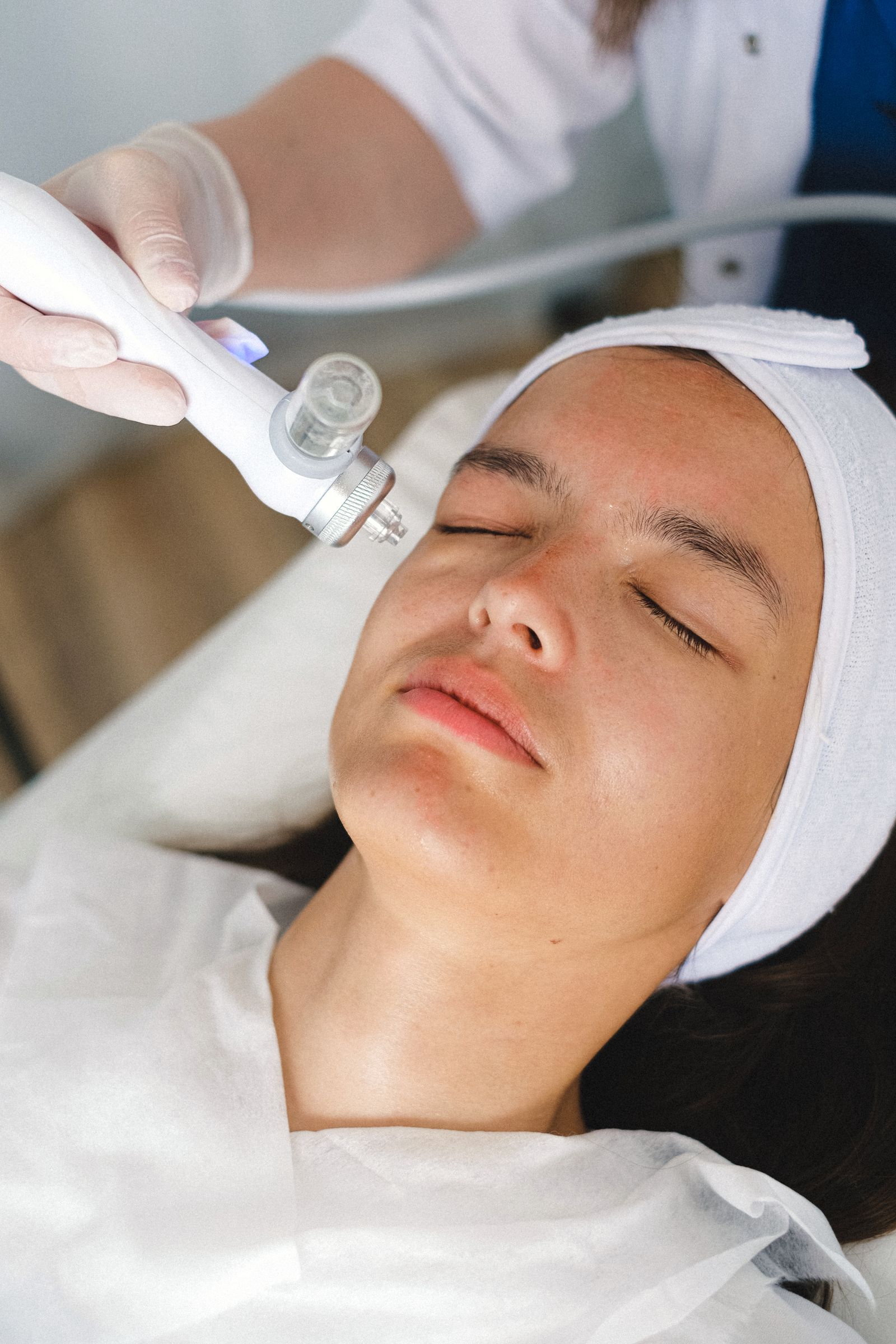
HydraFacial combines exfoliation, extraction, and serum infusion in one session—it's not just glorified cleansing. The vortex suction removes comedones more effectively than manual extraction, and the post-peel serum delivery (hyaluronic acid, peptides, antioxidants) penetrates freshly exfoliated skin. No downtime. We use it as a monthly maintenance treatment or as a primer before energy-based procedures.
Microneedling with PRP (platelet-rich plasma) is our workhorse for textural improvement and scar revision. We use adjustable-depth devices (0.5–2.5 mm depending on indication): 0.5–1.0 mm for product penetration and fine lines, 1.5–2.0 mm for acne scars and stretch marks, up to 2.5 mm for deep surgical scars. The controlled injury upregulates TGF-β and PDGF pathways—Dohan Ehrenfest's 2009 review describes the growth factor cascade released from activated platelets. We see collagen remodeling continue for six months post-treatment. Typical protocol: three to four sessions at four- to six-week intervals.
These treatments build the dermal foundation that makes energy devices more effective. You can't tighten poor-quality tissue and expect good contour.
Layer three: energy-based tightening—RF and HIFU
Once we've optimized skin quality, we address laxity with radiofrequency or high-intensity focused ultrasound. These aren't interchangeable—they target different depths and work via different mechanisms.
Radiofrequency devices like XERF (Fractional RF Microneedling) deliver dual-frequency energy: 6.78 MHz targets superficial dermis (0.5–2 mm), while 2 MHz penetrates to 3–4 mm for deeper collagen contraction. The microneedles create microchannels, and the RF electrode at each needle tip delivers controlled thermal injury to precise depths—usually 60–65°C, the threshold for collagen denaturation without necrosis. Gold's 2015 Dermatologic Surgery study showed fractional RF produced measurable tightening and wrinkle reduction at three months with minimal downtime (3–5 days of erythema and micro-crusting).
HIFU (high-intensity focused ultrasound) goes deeper—1.5 mm for superficial dermis, 3.0 mm for deep dermis, and 4.5 mm for the SMAS (superficial musculoaponeurotic system), the same layer lifted in surgical facelifts. The focused ultrasound creates thermal coagulation points at depth without surface damage. Suh et al.'s 2015 Archives of Aesthetic Surgery paper documented SMAS-level neocollagenesis on ultrasound imaging up to 90 days post-treatment. Results appear gradually over three to four months as new collagen replaces the coagulated zones. We typically see 15–20% lifting in the mid-face and jawline.
Key point: these devices work best on patients with mild to moderate laxity and good skin quality. We don't use them on patients with severe photodamage, active acne, or unrealistic expectations—they're not surgical facelifts. And we don't stack RF and HIFU in the same month; that's overtreatment.
Layer four: neuromodulators and fillers—when injectables make sense
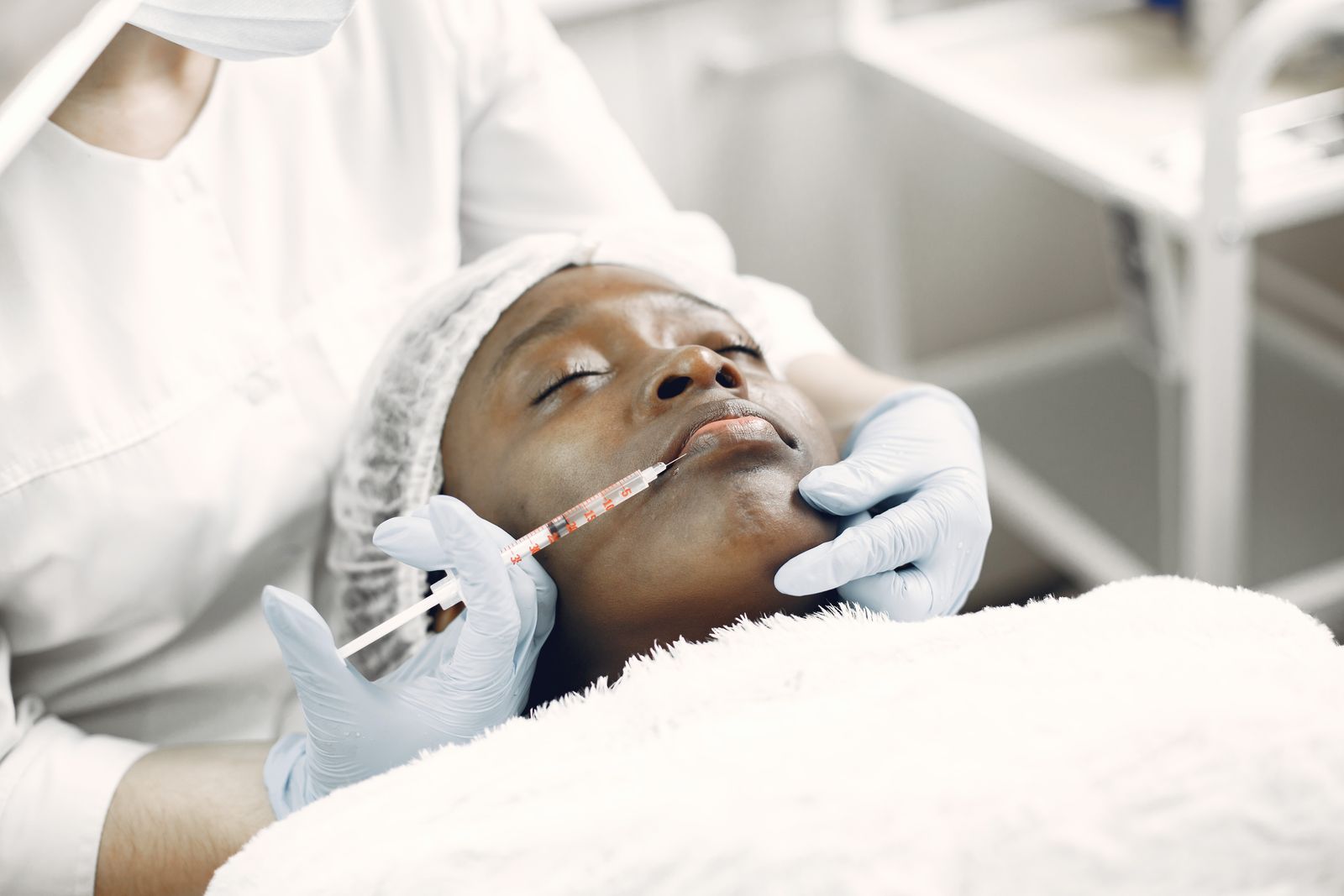
Injectables come last in our hierarchy, and we're selective. Neuromodulators (Botox, Dysport, Xeomin, Jeuveau) work by blocking acetylcholine release at the neuromuscular junction, temporarily weakening muscles that create dynamic wrinkles—glabella, crow's feet, forehead. Onset takes 3–5 days, peak effect at 10–14 days, duration 3–4 months. They're safe and predictable when dosed correctly: 20 units glabella, 12–24 units forehead, 12–16 units crow's feet (total 44–60 units, adjusted for muscle mass and gender). We see complications when injectors underdose (ineffective) or overdose (brow ptosis, frozen appearance).
Hyaluronic acid fillers (Juvederm, Restylane, RHA) restore volume loss and provide structural support. But we don't recommend filler before someone has the basics right—healthy skin quality, appropriate tightening if indicated, realistic expectations. Filler placed into lax, photoaged skin often migrates or looks unnatural. Fitzgerald et al.'s 2018 Aesthetic Surgery Journal review emphasizes that filler should follow, not replace, foundational skin health.
We're particularly conservative with filler in the mid-face. Overfilled cheeks create a puffy, unnatural appearance, and the trend toward "preventative filler" in younger patients (under 35) is largely marketing, not medicine. The 2023 JAMA Facial Plastic Surgery study found that complications from filler—vascular occlusion, granulomas, migration—have increased as volume use has escalated. We use filler for specific deficits: nasolabial folds, marionette lines, lip border definition, temple hollowing. Average treatment uses 1–3 syringes, not the 6–10 syringes marketed by some practices.
Biostimulatory injectables (Sculptra, Radiesse) deserve mention. Sculptra (poly-L-lactic acid) stimulates gradual collagen production over 3–6 months, typically requiring three sessions spaced four weeks apart. It's excellent for global volume loss and works synergistically with the skin health and tightening layers we've already built. Radiesse (calcium hydroxylapatite) provides immediate structure and stimulates collagen; we use it primarily for hand rejuvenation and jawline contouring.
What to skip: over-marketed treatments with weak evidence
Some treatments are heavily marketed but deliver marginal results. LED light therapy has theoretical merit—Wunsch and Matuschka's 2014 Photomedicine and Laser Surgery review describes cellular ATP upregulation—but clinical effects are subtle and require consistent, frequent sessions. It's not a substitute for retinoids or procedures.
Cryotherapy facials (applying extreme cold) and vampire facials (a marketing term, not a medical protocol) lack standardized parameters and long-term outcome data. PDO threads for lifting can work in expert hands but often disappoint—the 2019 Journal of Cosmetic Dermatology meta-analysis showed high variability in outcomes and significant complication rates (thread extrusion, dimpling, asymmetry). We prefer proven energy devices.
At-home RF and LED devices are generally underpowered. Professional RF delivers 40–60 watts at controlled depths; at-home devices deliver 3–5 watts at uncontrolled depths. The physics don't support equivalent results.
Building your personalized treatment plan
We see patients who've spent $15,000 on treatments in the wrong order—filler before sunscreen, lasers before retinoids, threads before addressing skin quality. Our approach: start with the least invasive, highest-evidence layer and progress only when fundamentals are solid. A typical first-year plan: establish skincare and sun protection (months 1–3), begin peel or microneedling series (months 4–7), consider RF or HIFU if laxity is present (month 8–9), reassess for selective filler at one year. Not everyone needs every layer.
We don't recommend treatments we wouldn't use ourselves or on our families. That means declining to treat patients with unrealistic expectations, refusing to overfill, and occasionally telling someone they don't need what they're asking for. The hierarchy works because it respects physiology and prioritizes long-term skin health over short-term correction.
Aesthetic medicine done right is a marathon, not a sprint. Start with the foundation, layer thoughtfully, and skip the noise.